Choosing a China top Hand Sanding Pads manufacturer and supplier requires more than comparing prices. Surface results depend on abrasive quality, foam flexibility, grit consistency, and production control. A pad that feels soft in the hand may still cut unevenly on painted metal or hardwood.
Experienced buyers inspect the details. They check grit markings, edge durability, dust resistance, and how the pad performs after repeated folding. In a workshop, these differences become visible quickly. Fine particles gather along the pad edge. The abrasive surface loses bite. The operator changes direction more often.
Reliable Chinese manufacturers usually support product sampling, material records, and batch inspection. Useful evidence includes clear specifications, stable packaging, and responsive technical communication. Suppliers should explain backing materials, abrasive minerals, available grits, dimensions, and private-label options without hiding limitations.
Real performance needs testing.
A practical evaluation can use the same pressure, sanding time, and surface material for every sample. Results should be recorded, not guessed. This approach helps importers select Hand Sanding Pads for automotive finishing, furniture production, home renovation, and general maintenance.
No supplier is perfect. Even a capable factory may face occasional variation between batches or delays during peak seasons. That possibility deserves honest discussion. The strongest partnerships depend on corrective action, transparent inspection, and consistent follow-up.
This introduction explores how to assess Chinese manufacturers and suppliers through product quality, manufacturing experience, communication, customization, and service reliability. It focuses on useful evidence rather than polished promises.
Hand sanding pads are flexible abrasive tools used to smooth, dull, or prepare surfaces by hand.
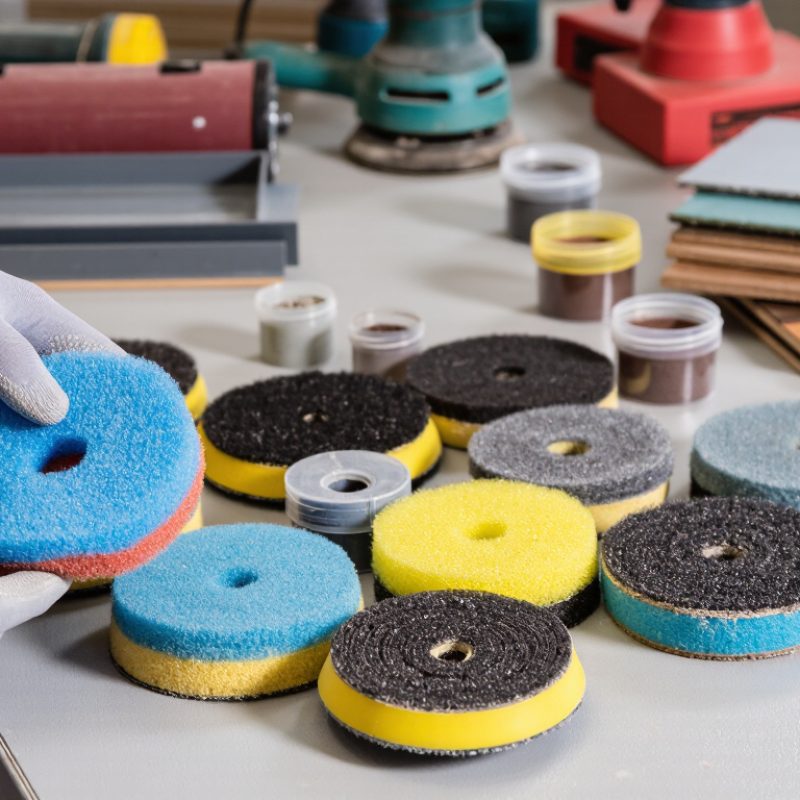
They usually contain abrasive minerals bonded to foam, fabric, or paper. Unlike rigid sheets, pads can follow curved edges and recessed areas. This makes them useful for wood, painted metal, plastics, and drywall.
Their performance depends on grit, pressure, and surface condition. Coarse grits remove scratches or uneven coatings. Fine grits create a smoother finish before painting or polishing.
The Global Abrasives Market report by Grand View Research estimated the market at about USD 46 billion in 2022. It also projected steady growth through 2030, supported by construction, automotive, and manufacturing demand. These figures suggest broad use, but they do not guarantee identical results in every workshop. Material hardness changes everything. A pad that works well on pine may clog quickly on soft filler.
Tips:
Use light, even pressure and inspect the surface often. Sand with the existing grain on wood. Fold the pad only when the abrasive layer remains fully active. Replace it when cutting action drops. Dust can hide scratches, so wipe the area before inspection. Personal experience matters here, although it can also create bad habits. Many users press too hard and blame the pad. Test a small hidden area first. Surface preparation rewards patience, not force.
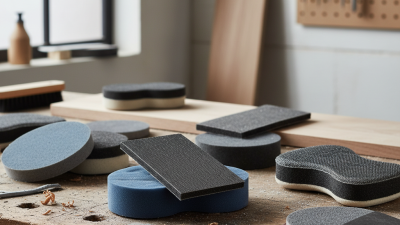
Hand sanding pads combine an abrasive surface with a flexible or semi-rigid backing. Common types include foam pads, sanding sponges, mesh pads, and nonwoven scouring pads. Foam-backed designs follow curved panels, while blocks keep edges flatter during wood or filler preparation. The backing matters as much as the abrasive.
Aluminum oxide is a practical choice for wood, primer, and general repair work. Silicon carbide cuts sharply on paint, plastics, and wet-sanding applications. Ceramic grain offers faster stock removal, although it may be excessive for delicate finishes. Diamond abrasives suit hard materials, but their higher cost requires careful selection. Typical ranges include P40–P80 for heavy removal, P120–P180 for surface preparation, and P220 or finer for finishing. Always confirm the grading system, because regional standards can differ.
Grand View Research estimates the global abrasives market reached approximately USD 47 billion in 2023, with continued growth expected through 2030. This scale reflects demand across metalworking, transportation, construction, and woodworking. Yet market size does not guarantee the right pad for every task. A soft pad can round corners unintentionally. Excessive pressure can clog the surface and create uneven scratches. I have found that lighter pressure, frequent pad cleaning, and a small test area produce more reliable results. That approach is slower at first. It is often safer. Surface hardness, coating thickness, dust level, and hand comfort should guide the final specification. Source: Grand View Research, Abrasives Market Size, Share & Trends Analysis Report.
Hand sanding pads begin with a nonwoven fiber web, abrasive mineral, resin binder, and controlled heat. Manufacturers meter the fibers before blending them with graded abrasive grains. The mixture passes through forming equipment, then receives resin for strength and flexibility. Pressure matters. Too much resin can reduce cutting speed. Too little may cause grain shedding. After curing, pads are trimmed, laminated, and packed by batch.
Grand View Research’s 2024 abrasives market report valued the global market at about USD 46.18 billion in 2023. It also forecasts a 4.7% compound annual growth rate through 2030. This figure covers many abrasive products, not only hand pads. Still, it shows why consistent production deserves close control. Quality teams inspect fiber distribution, abrasive coverage, thickness, density, and moisture. Samples are tested for cutting performance, clogging resistance, edge integrity, and surface uniformity.
Quality control is not perfect. A pad can pass visual inspection and still cut unevenly during practical use. Technicians therefore compare samples against approved references and record results by production lot. Dimensional checks use calibrated gauges, while performance tests often examine material removal after fixed strokes and pressure. An experienced China manufacturer also reviews customer feedback, especially complaints about premature loading or weak edges. That feedback can expose problems that laboratory testing misses. Small process changes should be documented, challenged, and retested before wider production.
Choosing a reliable hand sanding pad manufacturer requires more than comparing prices. Check the supplier’s production experience, material knowledge, and quality controls. A dependable manufacturer should explain foam density, abrasive bonding, backing strength, and grit consistency clearly. Ask for samples from different batches. Test the pad on wood, paint, and curved surfaces. Watch for uneven wear, loose abrasive particles, or a backing that curls after use.
Tips: Request a written specification sheet. Confirm minimum order quantities, lead times, packaging details, and replacement policies. Ask whether the manufacturer performs adhesion, durability, and dust-resistance tests. Inspect factory photos carefully, but do not treat photos as proof. A live audit or independent inspection offers stronger evidence.
Communication also reveals reliability. Suppliers should answer technical questions directly and admit limitations. Vague claims deserve caution. In practice, polished catalogs can mislead; I have seen attractive samples fail during extended sanding. A trustworthy manufacturer should welcome a trial order and provide traceable batch information. Review the results with your own operators, because a pad that feels comfortable for one task may cut too slowly for another. Perfect consistency is difficult. Honest reporting matters more than confident promises.
| Evaluation Dimension | What to Check | Practical Benchmark or Common Specification | Why It Matters |
|---|---|---|---|
| Abrasive Material | Confirm the abrasive grain used on the sanding pad. | Aluminium oxide for general wood and metal sanding; silicon carbide for fine finishing and painted surfaces; ceramic grain for demanding stock removal. | The grain type affects cutting speed, service life, surface finish, and suitability for different materials. |
| Grit Range | Check whether the supplier offers the grits required for preparation, smoothing, and finishing. | Common hand-sanding ranges include coarse grits around P40–P80, medium grits around P100–P180, and fine grits around P220–P600. | A complete grit range supports a consistent sanding process from material removal to final surface refinement. |
| Grit Standard | Verify whether grit numbers follow a recognized grading system and are clearly marked. | FEPA paper grades are commonly identified with a “P” prefix, such as P120 or P240; equivalent grading should be stated when another standard is used. | Clear grading prevents unsuitable substitutions and improves consistency between production batches. |
| Backing Material | Evaluate the flexibility, tear resistance, and thickness of the backing. | Paper backing is economical and suitable for general work; cloth backing is more flexible and durable; foam-backed pads improve comfort and contour conformity. | The backing determines how well the pad handles edges, curves, pressure, and repeated use. |
| Pad Construction | Check whether the product is a coated abrasive sheet, foam pad, abrasive sponge, or pre-cut hand pad. | Uniform abrasive distribution, secure bonding, and clean edge cutting should be visible across the pad. | Consistent construction reduces premature shedding, uneven sanding, and surface defects. |
| Common Pad Sizes | Compare available dimensions with the intended hand tool and application. | Common formats include approximately 70 × 125 mm, 75 × 100 mm, 115 × 140 mm, and 230 × 280 mm; custom die-cut sizes may also be available. | The correct size improves handling, material utilization, and compatibility with sanding blocks or holders. |
| Surface Applications | Ask for application guidance for wood, metal, plastic, paint, filler, and composite surfaces. | The supplier should recommend grit sequences and abrasive types according to the substrate rather than offering one universal pad. | Different materials generate different heat, dust, loading, and scratch-pattern risks. |
| Loading Resistance | Assess whether the pad is designed to resist clogging from paint, filler, resin, or soft wood. | Open-coat or stearate-treated products are commonly selected for materials that produce heavy sanding dust or clogging. | Better loading resistance extends usable life and helps maintain a more uniform finish. |
| Dust Management | Check whether the product supports hand sanding with dust extraction or includes perforated holes. | Perforation patterns should align with the intended sanding block or extraction system; standard hand pads may be non-perforated. | Effective dust removal improves visibility, reduces clogging, and supports a cleaner working environment. |
| Flexibility and Comfort | Test how easily the pad conforms to curved or contoured surfaces and whether it remains comfortable during extended use. | Flexible foam or sponge pads are generally better for contours; rigid-backed pads are better for maintaining flatness on broad surfaces. | Proper flexibility helps prevent uneven pressure and accidental sanding through edges. |
| Cutting Performance | Request comparative test results for cutting speed, scratch consistency, and usable life. | Testing should use the same grit, substrate, pressure, sanding time, and operator conditions for a meaningful comparison. | Controlled testing gives more reliable purchasing information than appearance or price alone. |
| Dimensional Tolerance | Review tolerances for pad length, width, thickness, and die-cut accuracy. | The supplier should provide documented internal tolerances and maintain consistent dimensions between production lots. | Stable dimensions improve packaging, automated handling, tool compatibility, and customer experience. |
| Bonding Quality | Inspect abrasive adhesion and check for grain shedding during normal hand use. | The abrasive layer should remain evenly attached without visible bare spots, excessive flaking, or edge separation. | Reliable bonding improves safety, surface consistency, and product service life. |
| Quality Control | Ask whether the manufacturer performs incoming-material, in-process, and finished-product inspections. | Relevant checks may include grit verification, dimensions, appearance, adhesion, packaging, and batch traceability. | A documented quality system reduces variation and makes recurring supply more dependable. |
| Sample Testing | Request samples before approving a large order and test them on the actual workpiece. | Compare at least two or three grit levels under the intended pressure, sanding time, and finishing requirements. | Real-use trials reveal cutting behavior and surface results that technical documents may not show. |
| Customization Capability | Check options for custom dimensions, grit combinations, packaging, hole patterns, printing, and private labeling. | A capable supplier should confirm minimum order quantities, tooling requirements, sample lead time, and production lead time in writing. | Clear customization terms help prevent delays, excess inventory, and specification misunderstandings. |
| Packaging and Storage | Evaluate protection against moisture, contamination, deformation, and mixed-grit errors. | Abrasive products should be stored in a clean, dry environment and protected from excessive humidity, heat, and direct sunlight. | Correct packaging and storage help preserve abrasive performance before the product reaches the user. |
| Supply Capacity | Review production capacity, equipment, workforce, and ability to handle repeat orders. | The manufacturer should provide realistic monthly capacity, production scheduling information, and a documented plan for peak demand. | Capacity transparency lowers the risk of stockouts and inconsistent delivery performance. |
| Lead Time | Compare sample, standard-order, and customized-order lead times. | Lead times should be confirmed separately for stocked items, new tooling, custom packaging, and repeat production. | Detailed lead-time commitments support accurate inventory planning and project scheduling. |
| Compliance Documents | Ask for applicable technical data sheets, safety information, test reports, and material declarations. | Documentation should identify product construction, recommended use, storage conditions, and relevant handling precautions. | Complete documentation supports responsible procurement and easier quality audits. |
| Total Cost | Calculate cost per usable sanding area or finished part rather than comparing unit price only. | Consider pad price, usable life, cutting speed, defect rate, packaging, freight, minimum order quantity, and replacement frequency. | A lower purchase price may not provide the lowest operating cost if the pad wears quickly or causes rework. |
| Communication and Service | Assess technical response quality, sample support, complaint handling, and after-sales communication. | Reliable suppliers provide clear specifications, written quotations, traceable batch information, and corrective-action responses. | Responsive communication is essential for resolving quality issues and maintaining long-term supply stability. |

China Top Hand Sanding Pads Manufacturer and Supplier
Custom hand sanding pads should match the work, not only the catalog. A dependable China-based manufacturer can adjust pad size, thickness, grit, density, and edge shape. For curved surfaces, softer foam improves contact and reduces uneven scratches. For flat panels, firmer backing supports steady pressure. Small trial orders help confirm performance before larger production.
Packaging also deserves practical attention. Individual poly bags protect pads from dust and moisture during transport. Printed cartons can show grit, dimensions, quantity, and handling details clearly. Pricing usually depends on material, abrasive grade, customization, order volume, and packing method. A supplier should provide a transparent quotation instead of hiding costs inside vague service fees.
Tips: Request samples first. Test several grits. Check carton strength.
Supplier service affects the whole purchasing experience. Technical staff should confirm drawings, tolerances, labeling, and delivery expectations before production. A clear inspection process may include grit checks, size measurements, bonding tests, and random carton reviews. In our experience, communication failures often create more delays than manufacturing problems. One mistake is assuming every custom detail is obvious. It is not. Written approval remains necessary, even for familiar orders. Flexible suppliers can also suggest material changes when a design seems costly or difficult to produce. However, their advice should be supported by samples and measurable results, not confident promises.
This chart compares common FEPA P-grade abrasive grits by approximate mean particle size. Lower grits remove material faster for stock removal, while higher grits create a smoother finish for preparation, finishing, and polishing work. Grit selection can support custom pad specifications, packaging plans, pricing discussions, and supplier service requirements.