How to Choose the Best 16mm Drill Bit in 2026?
Choosing a 16mm Drill Bit in 2026 starts with the material, not the label. A bit that cuts cleanly through mild steel may struggle in stainless steel, hardwood, or masonry. Check the drill’s chuck capacity, speed range, and power before buying. A 16 mm hole puts real demands on the tool.
Market context matters, but it cannot choose the bit for you. Grand View Research’s 2024 Power Tools Market report estimated the global market at USD 36.8 billion in 2023. That growth reflects broad demand, not proof that one bit suits every job. The USGS Mineral Commodity Summaries 2025 describes cemented carbides as a major use for tungsten, a material commonly used in wear-resistant cutting tools. Still, carbide is not automatically the best choice for every material or budget.
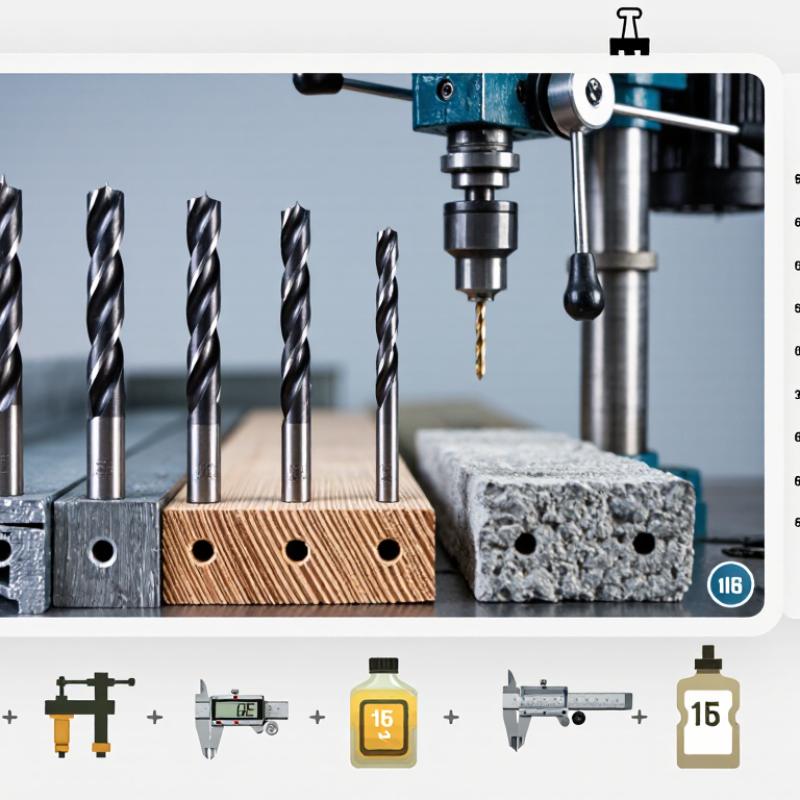
Look closely at the details. High-speed steel can suit general-purpose drilling; cobalt grades may better tolerate heat in harder metals. For a 16 mm hole in steel, a pilot hole, firm clamping, suitable cutting fluid, and a slower speed can help control heat and wandering. ISO 235:2016 specifies dimensions for several parallel-shank twist drills, but a standard does not guarantee cutting performance. Small print matters. Check the bit’s stated material, shank type, flute length, and intended use. Even a careful selection guide can miss how an older drill press vibrates or how quickly a blunt edge heats up. That is worth admitting. The best 16mm Drill Bit is the one matched to your material, machine, and actual working conditions.
What a 16mm Drill Bit Is and Where It Is Used
A 16mm drill bit cuts a hole roughly 16 millimetres wide, about the diameter of a small coin. The measurement describes the cutting diameter, not necessarily the shank that fits into the drill. Check both before buying. Some large bits have reduced shanks, while others need a drill with a matching chuck or suitable adapter.
The bit’s design should match the material. A brad-point bit helps make clean holes in timber, while a twist bit suited to metal works for steel or aluminium. For brick or concrete, use a masonry bit and a drill designed for that work. A wood bit pushed into masonry will not do the job. Not always obvious.
These bits are used for cable routes, pipe openings, furniture work, and other holes where a smaller pilot hole would be impractical. In a workshop, I would check the drill’s capacity and the workpiece thickness before starting; a 16mm cut can demand more torque than expected. Clamp the material, mark the centre, and drill steadily. Keep the bit cool when the material calls for it. I once assumed a sharp bit alone would prevent splintering, but the exit side still chipped. A backing board can help, though results depend on the material and setup.
How to Choose the Best 16mm Drill Bit in 2026?
What a 16mm Drill Bit Is and Where It Is Used
A 16mm drill bit makes a nominal 16mm hole. The chart shows illustrative starting spindle speeds for a 16mm high-speed-steel (HSS) twist drill in common materials. Actual speeds depend on the material grade, drill design, machine, and cutting conditions.
Representative speeds are calculated using the midpoint of typical cutting-speed ranges: mild steel 20–30 m/min, stainless steel 8–15 m/min, aluminum 40–80 m/min, and brass 30–60 m/min. Reduce speed when conditions require it, and follow the drill and machine guidance.
Which Bit Material and Coating Suit Your Workpiece
How to Choose the Best 16mm Drill Bit in 2026?
Which Bit Material and Coating Suit Your Workpiece
For mild steel, a high-speed steel (HSS) bit is a sensible starting point. It is tough, affordable, and less prone to chipping than solid carbide. Stainless steel creates more heat and work-hardening, so a cobalt-alloy HSS bit can handle demanding cuts better. Use steady pressure, a slower speed, and cutting fluid. A squeal or blue chips usually signal too much heat.
Coatings help, but they cannot fix a blunt edge or poor setup. Titanium nitride (TiN) can reduce friction and wear in general drilling; titanium aluminum nitride (TiAlN) suits hotter cutting conditions, especially when coolant is limited. For wood and plastic, an uncoated HSS bit is often adequate. Carbide handles abrasive or very hard materials, but a 16mm carbide bit can be brittle under hand-drill wobble. Not magic.
The USGS Mineral Commodity Summaries 2025 estimated global tungsten mine production at 81,000 metric tons in 2024, including 67,000 in China. Tungsten is a key carbide material, but this supply figure does not measure bit performance. Match the bit to the workpiece, then check its coating and cutting geometry. For a deep hole, clear chips often; even a good coating will not prevent clogging. A small pilot hole may help, though it is not always necessary.
How to Match the Shank and Bit Type to Your Drill
A 16mm label describes the cutting diameter, not the shank. Check the shank before buying. Measure the drill’s chuck capacity, then compare it with the bit’s shank diameter and shape. A round shank suits many keyed or keyless chucks, while a hex shank can help reduce slipping in compatible chucks. The bit must fit securely; forcing an oversized shank into a chuck is not a safe workaround.
Match the bit type to both the material and the drill. For wood, a brad-point bit helps keep the hole centered. For metal, choose a suitable twist bit and use a slower speed as the diameter increases. For masonry, select a masonry bit and use hammer mode only if your drill supports it. SDS shanks need a compatible SDS chuck. They do not fit ordinary three-jaw chucks.
It is easy to focus on the 16mm label and overlook the shank. I would check both twice. Also consider the drill’s power and the workpiece: a large bit can bind, especially in thick timber. Clamp the material, keep the drill steady, and follow the bit maker’s speed guidance. A small test hole can reveal a mismatch early. Not glamorous, but useful.
How to Compare Length, Flute Design, and Cutting Performance
Choosing a 16mm drill bit in 2026 starts with matching its working length to the hole. A short, jobber-style bit is usually easier to keep straight and resists flex better. A long bit reaches through thick stock, but its extra reach can amplify wobble. Measure the material, then allow room for the point. Not just reach.
Flute design controls how chips leave the hole. Deep, open flutes can clear long chips from softer materials, while a sturdier web may better support drilling harder stock. Two flutes are common, but the label alone tells little; inspect flute shape and chip space. Clear chips often. A packed flute can rub, build heat, and leave a rough bore.
Cutting performance depends on point geometry, work material, speed, and feed pressure. Secure the workpiece, start square, and apply steady pressure rather than forcing the cut. Watch for squealing, wandering, or blueing; pause and inspect instead of assuming more force will help. Test on scrap when possible. It is easy to skip. Compare results at the same depth and in the same material before choosing.
How to Check Safety, Durability, and Overall Value in 2026
How to Choose the Best 16mm Drill Bit in 2026?
How to Check Safety, Durability, and Overall Value in 2026
In 2026, choosing a 16 mm drill bit means checking more than its cutting edge. Match its material and tip design to the job: masonry, metal, and wood require different bit types. Confirm the shank fits your drill chuck, and check the drill’s stated capacity before buying. For repeated use, inspect the bit for straightness, clean flutes, and even grinding. Small defects matter. A low price is less useful if the bit wanders or wears quickly.
Safety starts with a secure workpiece and a drill speed suited to the bit and material. Wear eye protection, keep loose clothing clear, and let the bit cool during demanding work. Avoid forcing it; excess pressure can overheat the cutting edge or make the drill harder to control. For durability, consider the bit’s construction and whether its coating suits your task. Coatings can help in some applications, but they do not make every bit suitable for every material. It is easy to overvalue a polished finish; fit and intended use deserve more attention.
Tips: Check the packaging for compatible materials and operating guidance. Compare the cost with expected use, not just the number of bits included. If possible, inspect the cutting tip under good light before starting. A slightly slower cut can be a useful warning to pause and reassess, rather than press harder.