How to Choose the Best Masonry Bits for Concrete?
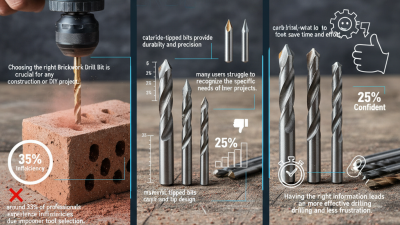
Choosing the right masonry bits for concrete is crucial for any construction project. Industry reports show that improperly selected bits can lead to inefficiency and costly mistakes. According to Dr. Sarah Williams, a renowned expert in masonry tools, “The right masonry bits for concrete can significantly reduce labor time and increase precision.”
When selecting masonry bits, consider factors such as material composition and purpose. Tungsten carbide bits are popular for their durability. However, there are several options available that may not be suited for every job. Some users end up with bits that are too soft or too hard for their specific needs, leading to frustration and potential project delays.
Also, the compatibility of the bits with your drill matters. Not all bits fit every drill model, which can lead to wasted time and effort. Understanding the specifications can make a significant difference. Reflecting on past experiences can guide your choices for future projects. Selecting the best masonry bits for concrete requires both knowledge and practical reflection on previous outcomes.
Understanding Masonry Bits and Their Construction
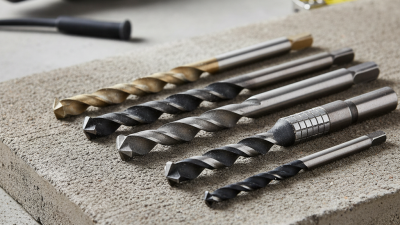
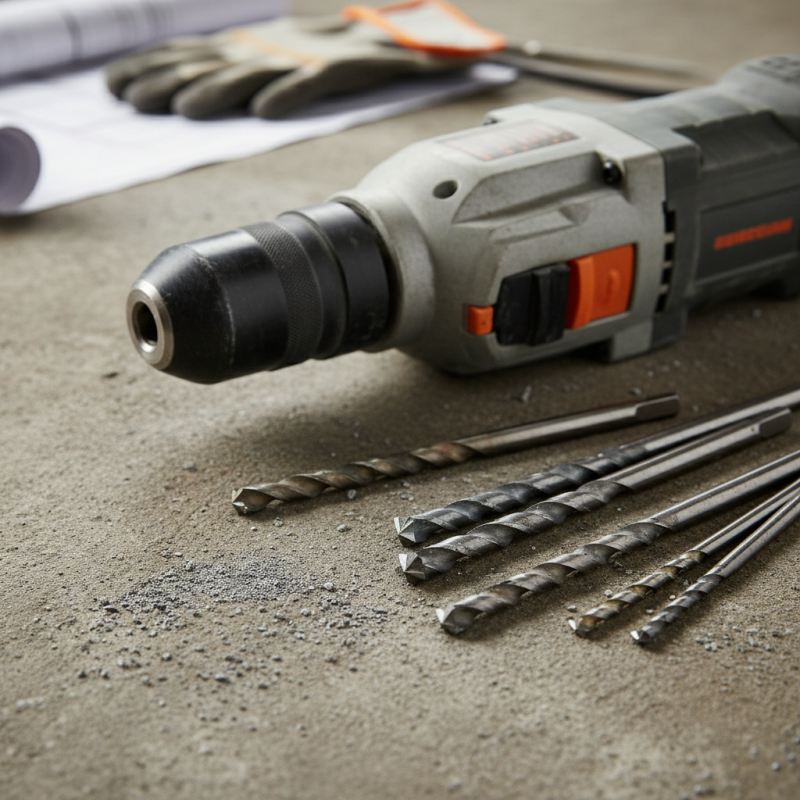
Masonry bits are essential tools for working with concrete. Understanding their construction helps in selecting the right type. These bits are designed with a carbide tip, which is harder than the concrete itself. This durability allows them to drill through tough materials with ease. The spiral flutes help remove debris as you drill. Each feature works together to create a reliable tool.
When choosing masonry bits, consider the size and type. Some bits are made for light work, while others handle heavy-duty tasks. The length of the bit is vital too. Longer bits can reach deeper into the material. However, they might require a more powerful drill. Pay attention to the wear on your bits, as they can dull over time. Recognizing when to replace a bit is crucial for efficiency.
It’s easy to overlook the importance of the right bit. Using an improper tool leads to frustration and can damage your project. Do not rush this choice. Evaluate your needs carefully. Each project is unique, and the wrong bit wastes time and effort. Learn from past mistakes to improve your choices in the future.
Types of Masonry Bits Suitable for Concrete Applications
When selecting masonry bits for concrete, consider the various types available. Each has distinct features. The primary options include carbide-tipped, diamond, and masonry drill bits. Carbide-tipped bits are well-known for their durability. They can handle tough materials like concrete reliably.
Diamond bits are exceptional for heavy-duty applications. They provide precision and longevity. Reports indicate that diamond drill bits can last up to 20 times longer than standard bits in concrete. However, they come with a higher cost. The investment can be worthwhile for frequent users or professionals.
Masonry drill bits are designed for lighter tasks. They are suitable for brick and block, but may struggle with dense concrete. Using the right bit is essential. An improper selection can lead to inefficiency. This can waste time and increase project costs. Proper maintenance and, at times, replacing older bits can improve performance. The right choice is crucial for achieving the best results in concrete drilling.
Key Features to Consider When Selecting Masonry Bits
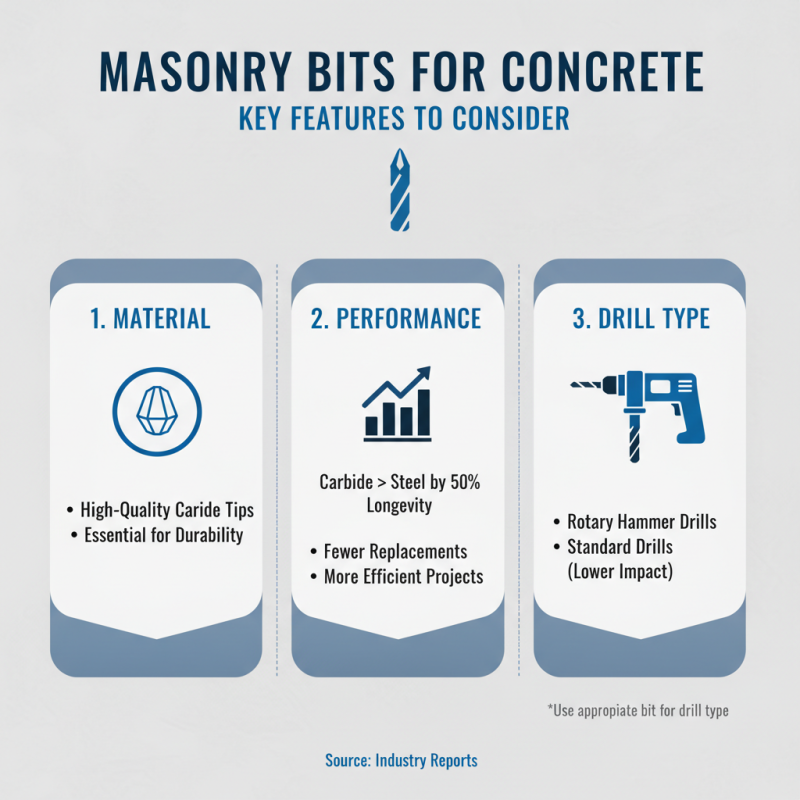
When selecting masonry bits for concrete, several key features should be considered. The drill bit's material plays a crucial role. High-quality carbide tips are essential for durability. According to recent industry reports, bits with carbide tips outperform standard steel bits by up to 50% in longevity. This higher durability means fewer replacements and more efficient projects.
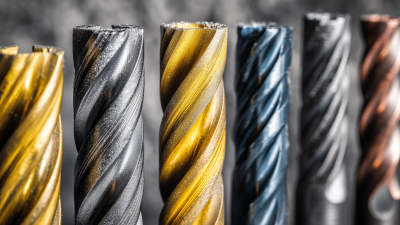
Another critical factor is the bit's design. Look for bits with a spiral flute. This design improves debris removal during drilling. A study showed that bits with a proper flute design can enhance drilling speed by up to 30%. The diameter of the bit also matters. Choose a size based on the project’s specific requirements, as using the wrong diameter can lead to poor outcomes.
Pay attention to the shank type as well. Hex shank designs provide a better grip in most drills. This minimizes slippage and enhances control. However, not all masonry bits are perfect for every concrete type. Some bits perform well on soft concrete, while others are better suited for harder surfaces. It's essential to match the bit to the concrete’s characteristics.
Proper Usage Techniques for Masonry Bits in Concrete
When working with concrete, proper usage techniques for masonry bits are essential. Start by selecting the right bit. Look for carbide-tipped options. These are durable and can handle tough materials. Always ensure the drill bit is sharp. A dull bit can cause frustration and inefficient drilling.
Before drilling, mark your spot clearly. This helps in accuracy. Use a hammer to create a small indentation. It prevents the bit from slipping. Maintain a steady pressure while drilling. Too much force can break the bit. Too little can lead to overheating. Adjust your speed based on the resistance you feel. Sometimes, going slower is more effective.
Clean the drill site as you work. Dust can clog your bit and hinder performance. It’s also wise to check your depth frequently. An unexpected breakthrough can cause damage or injury. Reflect on your technique periodically. Adapting your approach as you gain experience makes a big difference. Proper usage techniques ensure safety and achieve the desired results.
How to Choose the Best Masonry Bits for Concrete? - Proper Usage Techniques for Masonry Bits in Concrete
| Bit Type |
Material |
Suitable for |
Diameter Range (mm) |
Usage Tips |
| Masonry Bit |
High-Speed Steel |
Brick, Block |
3 - 20 |
Lubricate periodically to extend life. |
| Diamond Bit |
Diamond Coated |
Concrete, Stone |
4 - 25 |
Use a wet cutting method to prevent overheating. |
| Carbide Tip Bit |
Carbide |
Concrete, Reinforced Concrete |
5 - 30 |
Drill at a slower speed for best results. |
| SDS Plus Bit |
Tungsten Carbide |
Concrete, Masonry |
6 - 30 |
Ensure proper fitting for impact drill use. |
| Hammer Drill Bit |
Steel with Carbide Tip |
Brick, Concrete |
8 - 28 |
Use a hammer drill for optimal performance. |
Maintenance Tips for Extending the Life of Masonry Bits
Masonry bits are essential for drilling into concrete. To prolong their life, proper maintenance is crucial. According to a recent industry report, nearly 30% of masonry bits fail due to lack of care. Regular cleaning after use can prevent dust build-up, which affects performance. Simply using a wire brush can make a big difference.
Rotating the bits is another overlooked technique. Instead of using the same spot repeatedly, changing the drilling angle can distribute wear evenly. This simple practice can extend the lifespan of your tools significantly. Additionally, coolant fluids can reduce overheating, a common issue that can compromise bit integrity.
Storing bits correctly also matters. A damp environment can lead to rust, while a dry, organized space keeps tools ready for use. Many ignore this step, leading to premature failure. Regularly inspecting bits for signs of wear can save time and money. Keeping track of their condition ensures you replace them just when needed.
Performance of Different Masonry Bits for Concrete