How to Choose the Right Drum Sander for Your Woodworking Projects?
Choosing the right drum sander can make or break your woodworking projects. This tool is essential for achieving a smooth, flat surface on wood. Whether you are a beginner or a seasoned woodworker, the right drum sander can enhance your workflow and output quality.
Consider several factors before making a choice. The size of the drum sander matters. A smaller model may be better for hobbyists, while larger models suit professional use. Speed settings and power also play crucial roles. They determine how quickly and efficiently you can sand your materials. Many users overlook the importance of dust collection systems, which significantly impact cleanliness and safety in your workspace.
Selecting a drum sander may feel overwhelming. Users often struggle with the balance between price and quality. It’s easy to be swayed by flashy features, but practicality should guide your decision. Take the time to reflect on your specific needs. Understanding these factors will not only enhance your woodworking experience but also help you choose a drum sander that truly fits your projects.

Understanding Drum Sanders: Types and Features
When selecting a drum sander, understanding the types and features is crucial. Drum sanders come in various types, such as open-ended and closed models. Open-ended sanders offer flexibility, allowing you to sand wider materials. Closed models provide more support for narrower projects. According to a recent report by the Woodworking Industry Association, nearly 30% of woodworkers prefer open-ended models for their versatility.
Key features also impact performance. Motor power is essential; a stronger motor translates to faster sanding. Most quality drum sanders feature motors ranging from 1.5 HP to 5 HP. A unit with a reliable dust collection system is vital as well. Reports indicate that effective dust extraction can reduce respiratory issues among woodworkers by 40%, making health a priority.
Additionally, sanding speed is an important consideration. A slow speed can lead to uneven surfaces. However, too fast can burn the wood. Aim for a sander with adjustable speed settings for better control. Not all drum sanders maintain consistent pressure, which can lead to defects, such as snipe marks. Careful research can guide you in making a well-informed decision.
Assessing Your Woodworking Needs for Drum Sander Selection
Choosing the right drum sander begins with assessing your woodworking needs. Understanding your projects helps narrow down options. For example, a large volume of sanding for cabinetry may require a wider sander. Research from the Woodworking Institute indicates that 80% of professionals prefer sanders with a minimum width of 24 inches for efficiency in larger projects.
Consider the material you typically work with. If you often sand hardwoods, a powerful motor is essential. The average motor size for most drum sanders is from 1.5 to 5 horsepower. A more powerful motor can handle denser woods without bogging down. Additionally, note that different sandpaper grits will affect finish quality. A sandpaper grit selection should include fine and coarse options to meet various needs.
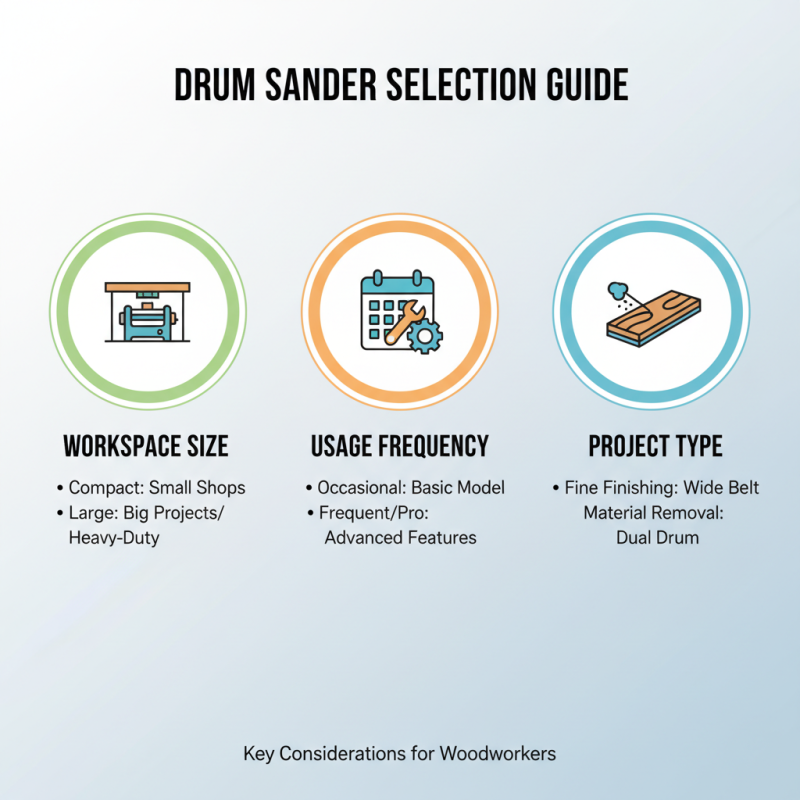
Finally, think about the space available and ease of use. Many users overlook weight when selecting equipment. A heavier drum sander may offer stability but can be challenging to maneuver. According to a survey by Fine Woodworking Magazine, 65% of users cite portability as a critical factor in their decision. Reflect on your workshop's layout. A sander that fits well can make a significant difference in workflow.
Woodworking Projects and Drum Sander Selection
Budgeting: Cost vs. Quality in Drum Sanders
When selecting a drum sander for woodworking, budgeting is crucial. The cost often reflects the quality and features. A lower-priced sander may lack durability or performance. On the other hand, high-quality sanders can come with a steep price tag. It's vital to find a balance that suits your needs without breaking the bank.
Consider what you’ll be sanding. If it’s occasional DIY projects, a basic model may suffice. For extensive work, investing in a more efficient, durable sander is wise. Don’t overlook additional costs for replacement parts and sandpaper. These can add up quickly, impacting your overall budget.
Tips: Always read customer reviews to gauge quality. Look for online forums where woodworkers discuss their experiences. This can offer valuable insights. It helps to test a sander if possible. If you find the one that feels right but is slightly over budget, reflect on its longevity and benefits. Sometimes, a higher initial cost saves money in the long run.
Maintenance Tips for Longevity of Your Drum Sander
Maintaining a drum sander is crucial for its longevity. Regular cleaning is essential. Dust accumulation can affect performance, leading to uneven sanding. Use a soft brush to remove debris from the drum and surrounding areas. This simple step can greatly enhance efficiency.
Inspecting the sanding belt frequently is also important. Look for signs of wear, such as cracks or fraying. A compromised belt may cause scratches on your wood surface. Replace worn belts promptly to avoid frustrating results. Additionally, check the tension of the belt. A loose belt can lead to poor results and increased wear on the sander itself.
Don't overlook the drive mechanism. Regular lubrication keeps the sander operating smoothly. Refer to the manufacturer's guidelines for appropriate lubricants. Over time, wear and tear can affect performance. Identify any unusual sounds or vibrations during operation. These may indicate a need for professional servicing. Taking these maintenance steps seriously can ensure your drum sander remains a dependable tool for years.
How to Choose the Right Drum Sander for Your Woodworking Projects? - Maintenance Tips for Longevity of Your Drum Sander
| Feature |
Description |
Maintenance Tips |
| Motor Power |
Indicates the strength of the drum sander, measured in amps. |
Regularly check for overheating and ensure proper ventilation. |
| Sandpaper Grit |
Determines the level of fineness or coarseness required for projects. |
Change sandpaper frequently to avoid damage to the motor and workpiece. |
| Table Size |
Refers to the width and length of material it can handle. |
Keep the table clean and free of debris to ensure smooth operation. |
| Dust Collection |
Integrated systems help in keeping the workspace clean. |
Regularly check and clean the dust collection system for efficiency. |
| Portability |
Weight and design that determine how easily the sander can be moved. |
Ensure wheels and handles are functioning properly for easy transport. |