How to Choose the Best Brick Grinding Machine in 2026?
Choosing the best brick grinding machine in 2026 starts with the material, not the catalog. Brick Grinding may mean reducing fired-brick waste into aggregate, preparing clay, or refining a surface. Each task demands different feed sizes, output grades, and machine designs. The U.S. Environmental Protection Agency’s AP-42, Section 11.3, describes grinding and screening as steps in brick and structural-clay manufacturing. That makes material preparation a practical starting point for comparing equipment.
Energy use deserves attention, too. The 2024 Global Status Report for Buildings and Construction, published by UNEP and the Global Alliance for Buildings and Construction, reports that buildings accounted for 32% of global energy use and 34% of energy-related CO₂ emissions in 2023. Those figures cover the wider sector, not grinding machines alone. Still, they underline why power consumption, dust control, and usable output belong in a machine assessment. Not every line.
A 2026 shortlist should compare throughput against your actual feedstock, including moisture, hardness, and contamination. Ask suppliers for test results using similar bricks, and check whether the stated capacity includes real-world loading and changeovers. Inspect wear parts, maintenance access, noise, and dust extraction before focusing on headline speed. A neat specification sheet can mislead; its capacity figure is a starting point, not a guarantee. Some plants may prioritize a finer product, while others need dependable volume. The right choice depends on the job—and on what your operators can maintain consistently.
Identify Your Brick Grinding Needs and Material Requirements
Choosing a brick grinding machine starts with the feed, not the machine’s advertised capacity.
Fired clay brick, concrete masonry, and reclaimed mixed rubble behave differently under crushing. Check hardness, moisture, mortar content, and embedded metal. A damp, mortar-rich load may clog screens; a dry batch can create more dust.
Not just color.
Ask for a sample test using material from your actual site.
The U.S. Environmental Protection Agency’s 2018 Advancing Sustainable Materials Management report estimates that the United States generated
600 million tons of construction and demolition debris in 2018.
That figure covers all such debris, not brick alone, but it shows why feedstock can vary widely.
Record your expected tonnes per hour and the required particle size for reuse, such as bedding, aggregate, or filler. Then compare test results for output size, energy use, dust, and wear. A clean sample can mislead. Include dirty and wet pieces in the trial; otherwise, the estimate may look better than real production.
Worth checking.
Consult the equipment supplier’s technical data and keep your own test notes before choosing a grinding system.
Compare Brick Grinding Machine Types and Their Suitable Applications
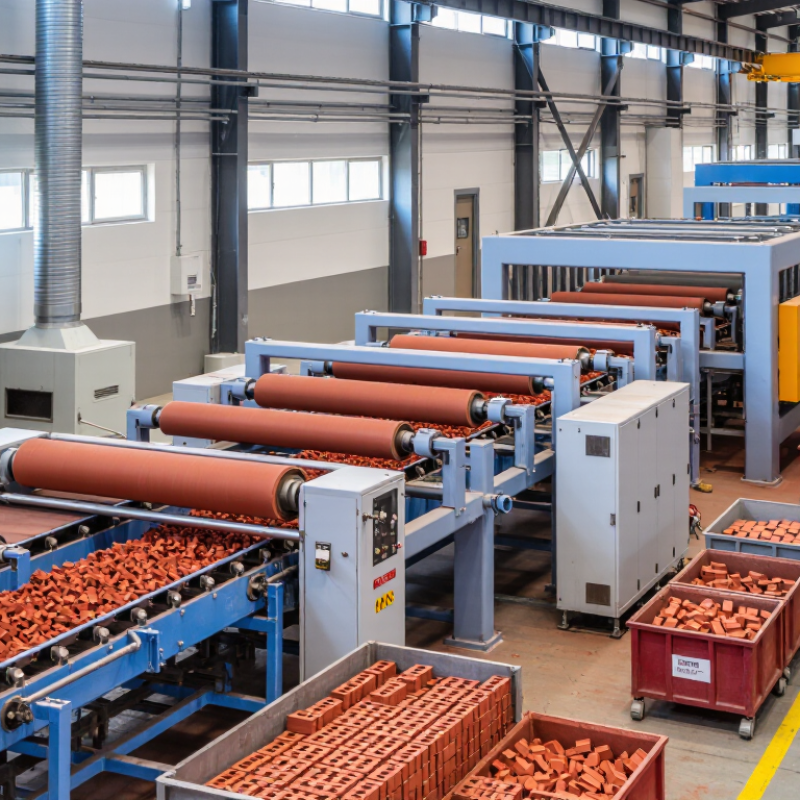
Brick plants do not all need the same grinding action. A jaw crusher or roll crusher suits hard, dry brick scrap and coarse size reduction. Hammer mills handle mixed fired-brick fragments quickly, but can create excess fines. For finer, more even material, roller mills offer controlled sizing. Wet pan mills suit plastic clay preparation, where grinding and moisture mixing happen together.
The U.S. Environmental Protection Agency’s AP-42 section on brick manufacturing describes crushing, grinding, screening, and blending as key preparation steps. Match the machine to the material entering that process, not just the desired output. Check feed size, moisture, throughput, and the proportion of fines. A neat specification sheet can mislead. Test a representative batch if possible; clay that looks dry may still clog a screen.
Energy use also deserves attention. The Global Alliance for Buildings and Construction reported that buildings and construction accounted for 34% of global energy demand in 2022. That figure covers the wider sector, not brick grinding alone, but it reinforces the value of efficient material preparation. Ask suppliers for measured power consumption at your actual feed rate. Also inspect wear parts, dust extraction, and access for cleaning. Dust still escapes. A machine that meets the target particle size but needs frequent stoppages may not fit a high-volume line.
Evaluate Capacity, Power, Precision, and Key Technical Specifications
How to Choose the Best Brick Grinding Machine in 2026?
Evaluate Capacity, Power, Precision, and Key Technical Specifications
Start with the job, not the motor rating. Estimate hourly brick volume, typical feed size, and the finished dimensions your work requires. A machine rated in tonnes per hour may perform differently with dense, damp, or irregular pieces. Ask for test results using material close to yours. Check motor power alongside duty cycle, starting load, and energy use.
Precision deserves equal attention. Compare output-size range, adjustment increments, wheel speed, vibration, and the stated tolerance. The U.S. Department of Energy’s 2014 sourcebook on motor and drive systems reports that motors account for about 68% of U.S. manufacturing electricity use. That figure covers manufacturing broadly, not brick grinding alone, but it shows why operating efficiency matters. A published capacity can still flatter performance. I would verify it in a supervised material test.
Tips: Request measured output and power consumption for your own feed material. Inspect the finished edge under consistent lighting, and check whether adjustments stay stable after repeated runs. Small details matter. Confirm dust collection, wear-part access, and maintenance intervals before comparing prices. A slightly slower machine may produce more usable bricks. That trade-off is easy to miss on a specification sheet.
Check Safety Features, Maintenance Needs, and Operating Requirements
How to Choose the Best Brick Grinding Machine in 2026?
A brick grinding machine should suit the work, not just look powerful. Check that guards cover moving parts and that the emergency stop is easy to reach. Ask how the machine controls dust, especially if it will run indoors. A dust extraction connection and suitable collection system can help keep the work area cleaner. Small details matter.
Maintenance affects both uptime and finish quality. Review how often the grinding components, filters, and moving parts need inspection or replacement. Can one worker access them safely? Are common wear parts easy to obtain? A clogged filter or worn abrasive can reduce performance, even when the motor sounds fine. I would not assume a larger machine always needs less attention. That is easy to overlook.
Match operating requirements to your actual jobs. Estimate the number of bricks processed per shift, their size, and how much material each job removes. Then check the machine’s power supply, workspace, ventilation, and handling needs. If possible, request a demonstration using similar bricks and inspect the surface afterward. A neat test result is useful, but it may not reflect a full day’s workload. Keep the operating manual and maintenance schedule available for the people who will run the machine.
How to Choose the Best Brick Grinding Machine in 2026?
Compare a machine’s noise emissions with these occupational exposure benchmarks as part of your safety and operating-requirements review.
How to use this chart: These are 8-hour time-weighted-average exposure benchmarks, not machine sound-rating limits. Actual exposure depends on the machine, material, work area, and time spent grinding. Check the manufacturer’s noise data, assess workplace exposure, and follow applicable local regulations. Also review guarding, dust control, maintenance access, and operating requirements before choosing a machine.
Sources: OSHA 29 CFR 1910.95 (85 dBA action level; 90 dBA permissible exposure limit) and NIOSH Criteria for a Recommended Standard (85 dBA recommended exposure limit).
Compare Total Costs, Supplier Support, and Long-Term Value in 2026
A low purchase price can hide high costs in electricity, abrasive parts, downtime, and operator training. Compare each machine over its expected service life, not just by its quotation. The U.S. Department of Energy’s Improving Motor and Drive System Performance sourcebook reports that motor-driven systems use about 54% of U.S. manufacturing electricity. That figure is not specific to brick grinding, but it shows why motor efficiency and actual power draw deserve close attention. Ask suppliers for measured consumption under a comparable workload, not only rated motor power.
Supplier support also affects long-term value. Check local technician availability, spare-part lead times, warranty exclusions, and training options. Request prices for commonly replaced grinding components. A machine that waits weeks for a part may cost more than one with a higher purchase price. One estimate will still be wrong. Dust levels, brick hardness, and shift patterns can change wear rates, so treat supplier projections as assumptions to verify.
Tips: Before buying, test representative bricks and record output per hour, energy use, surface consistency, and tool wear. Get the test conditions in writing. Compare those results with a realistic annual workload, including maintenance and downtime. Keep the numbers simple, but revisit them after installation.