Why choose a Diamond Blade for cutting? The answer begins with the material beneath the blade. Concrete, masonry, asphalt, and tile differ in hardness, abrasiveness, and aggregate. A blade matched to the job can cut consistently, reduce chipping, and help limit unnecessary downtime. The difference is practical. On a concrete slab, the right bond and segment design can matter as much as the saw’s power.
Professional guidance also makes dust control part of the decision. OSHA’s construction silica standard sets a permissible exposure limit of 50 micrograms per cubic meter of air over an eight-hour workday. It specifies engineering controls, including water delivery for many concrete-sawing tasks. NIOSH’s Health Effects of Occupational Exposure to Respirable Crystalline Silica review explains why fine silica dust deserves serious attention. Dust matters, too. A suitable blade is only one part of a safe cutting setup; the saw, water supply, operator training, and work area all count.
Diamond blades use synthetic or natural diamond abrasive in a metal bond to wear through hard materials. But there is no magic. Blade life and cutting speed vary with material, machine condition, feed pressure, and wet or dry use. That is why selection should follow the manufacturer’s specifications and the actual job—not just a low purchase price. For contractors and experienced DIY users, the best choice balances cut quality, service life, and controlled operation. Small details matter: a steady water stream, a compatible arbor, and a blade rated for the material can change the result. These are useful starting points, not guarantees.
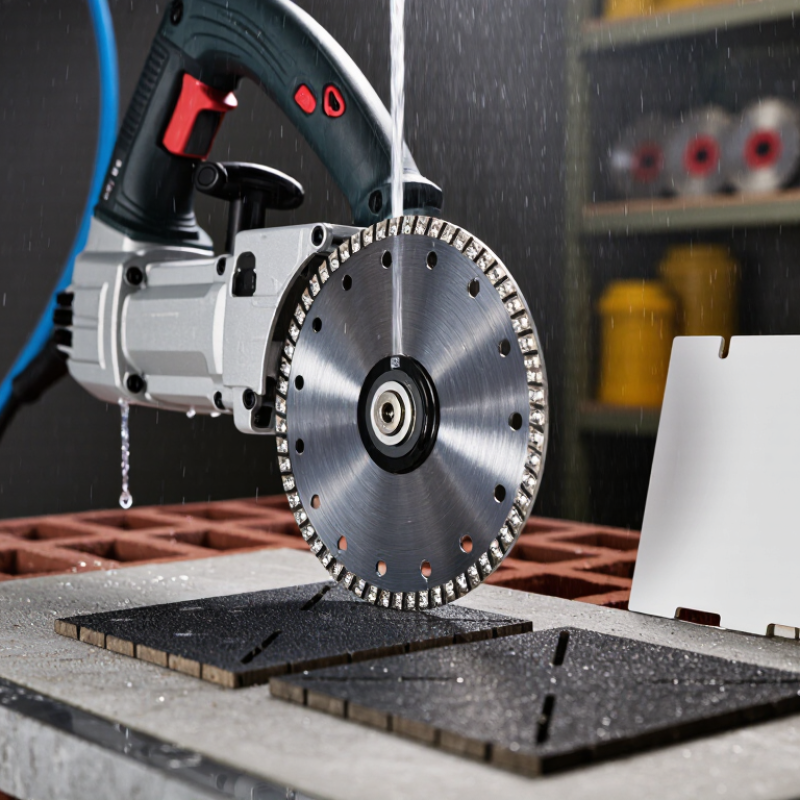
Diamond ranks 10 on the Mohs hardness scale, the highest rating. That does not mean a blade’s entire body is diamond. Small diamond particles are set along its cutting edge, where they grind through materials such as concrete, tile, and stone. Think abrasion, not slicing. The steel core supports the edge and helps keep the blade stable.
As the blade turns, exposed diamonds wear down and the surrounding bond gradually releases them, revealing fresh particles. The bond matters: a blade suited to hard tile may not perform well in abrasive concrete. Material, blade design, and cutting conditions all affect the result. Even a suitable blade can leave a rough edge if it is pushed too hard. That part is easy to underestimate.
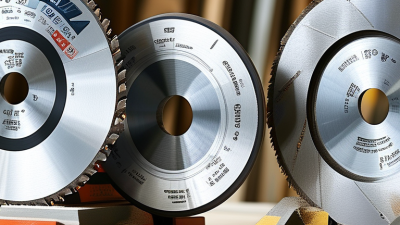
A diamond blade cuts through exposed synthetic diamond grits, not a solid diamond edge. The USGS Mineral Commodity Summaries 2024 estimates that global synthetic industrial-diamond production reached about 16 billion carats in 2023. That scale supports a wide range of grit sizes and quality grades. Coarser grits can cut aggressively, while finer grits often leave a smoother finish. The right choice still depends on the material and cutting conditions.
The bond holds each grit and gradually wears to expose fresh cutting points. A softer bond often suits hard materials, where diamond wears quickly; a harder bond can last longer in abrasive materials. This is a useful rule, not a guarantee. Segment shape and bond formulation also matter. The steel core supports the blade and helps it track steadily. Tensioning and cooling slots can reduce vibration and heat, but poor setup can still cause wandering or uneven wear.
Tips: Match the blade to the material and use the maker’s rated speed. Check the core for damage before cutting. Use suitable water or dust controls. A blade that seems slow may need a different bond, not more pressure.
Why Choose a Diamond Blade for Cutting?
Material Matching: Hard-Bond and Soft-Bond Blade Selection
A diamond blade cuts through exposed diamond particles, while its bond controls how quickly worn particles release. Match the bond to the material. On abrasive concrete or sandstone, a hard bond resists rapid wear and helps extend blade life. On hard, dense materials such as granite or cured concrete, a softer bond sheds dull diamonds sooner, exposing fresh cutting edges. The cut should stay productive. Not always obvious.
Material varies even within one job. The U.S. Geological Survey’s Mineral Commodity Summaries 2024 estimates U.S. crushed-stone production at about 1.5 billion metric tons in 2023. That figure reflects a wide range of rock types, not one uniform cutting condition. Check the aggregate, concrete age, and blade maker’s material guidance before choosing. During a test cut, watch for glazing, slow progress, or unusually fast segment wear; these can signal a bond mismatch. A softer bond is not automatically better. I’d also reconsider the choice if the blade cuts cleanly at first but slows as the segment face polishes. Use water or dust controls appropriate to the tool and site.
| Selection Factor | Hard-Bond Blade | Soft-Bond Blade |
|---|---|---|
| Bond behavior | Retains diamond segments longer and wears more slowly. | Wears more readily, exposing fresh diamond particles as the blade cuts. |
| Best material match | Abrasive materials that wear the bond quickly. | Hard, dense materials that wear diamond particles down more slowly. |
| Typical examples | Asphalt, green concrete, sandstone, and other highly abrasive materials. | Hard or dense concrete, granite, and some hard masonry materials. |
| Why the match matters | A harder bond helps resist rapid segment wear in abrasive material, supporting longer blade life. | A softer bond helps release worn diamonds and expose new cutting edges, helping prevent glazing in hard material. |
| Possible sign of a mismatch | On very hard material, the blade may cut slowly or glaze if the bond does not wear enough to expose fresh diamonds. | On highly abrasive material, the segments may wear down too quickly. |
| Practical selection tip | Consider a hard bond when the material is abrasive and tends to consume the blade segment rapidly. | Consider a soft bond when the material is hard and the blade needs to expose fresh diamonds during cutting. |
| Important qualification | Bond hardness is only one selection factor. The correct blade also depends on the specific material mix, aggregate, blade design, saw, and wet- or dry-cutting requirements. Follow the blade manufacturer's material chart and operating instructions. | |
A diamond blade can cut hard materials cleanly, but safe operation starts with checking its speed rating. Before mounting it, compare the blade’s marked maximum RPM with the saw’s rated or no-load RPM. The saw must not exceed the blade’s limit. Also confirm the blade diameter and arbor fit the machine. A mismatch can cause overheating, damage, or loss of control. Check twice.
EN 13236 sets safety requirements for superabrasive products, including diamond cutting tools. Look for clear markings and follow the blade maker’s instructions for its intended material and cutting method. The standard matters, but it does not replace careful setup or a sound machine.
Inspect the blade for cracks, missing segments, or a damaged core, and keep the guard in place. Secure the workpiece so it cannot shift under pressure. Use water only with equipment and blades designed for wet cutting.
It is easy to focus on cutting speed and overlook a loose clamp; that small check is worth the pause. Stop the machine before adjusting anything, and let the blade reach full speed before cutting. No guesswork.
A diamond blade cuts concrete, masonry, and tile through a fast-moving abrasive rim. But the cut can release respirable crystalline silica, a fine dust that may linger around the saw and settle on nearby surfaces. OSHA’s construction standard sets an eight-hour permissible exposure limit of 50 micrograms per cubic meter, with an action level of 25 micrograms per cubic meter (29 CFR 1926.1153). The limit is not a visible-dust target. A clear-looking work area can still need controls.
Water matters. OSHA’s Table 1 calls for integrated water delivery on many saws, with water supplied continuously to the blade. At a jobsite, that means checking the hose before each cut, keeping the spray aimed at the blade, and managing slurry so it does not dry into dust. NIOSH’s guidance on preventing silicosis in construction also recommends wet methods and other exposure controls (NIOSH Alert 2002-129). A diamond blade can make a clean, steady cut, but it does not control silica by itself.
Keep the water flowing. Keep people out of the plume. If wet cutting is impractical, a competent exposure assessment can help determine what additional controls or respiratory protection are needed. I have seen crews focus on blade speed and overlook the damp slurry drying beside the work area. That detail is easy to miss, and it deserves attention.
Why choose a diamond blade? When paired with appropriate wet-cutting methods, a diamond blade can help control dust at the source. OSHA’s respirable crystalline silica action level is 25 μg/m³ and its permissible exposure limit (PEL) is 50 μg/m³, each measured as an 8-hour time-weighted average. Actual exposure depends on the tool, material, work practices, and controls; assess exposure and follow applicable requirements.