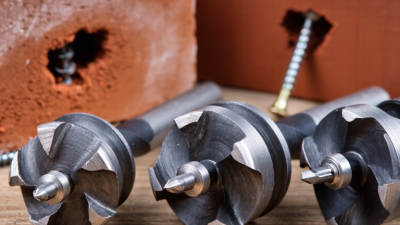
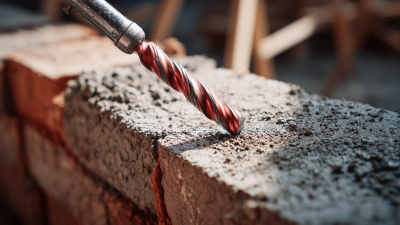
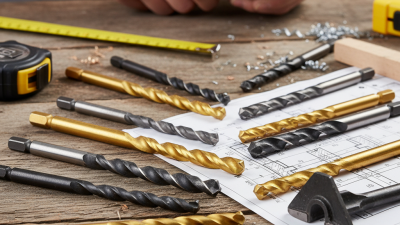
Choosing reliable China Top Masonry Bits for Concrete Manufacturers requires more than comparing prices or catalog photos. Contractors need tools that cut cleanly through brick, block, stone, and cured concrete. The right bit should keep its carbide tip stable, remove dust efficiently, and maintain a consistent hole diameter during repeated drilling.
Masonry Bits For Concrete are commonly judged by carbide grade, brazing quality, flute design, shank accuracy, and impact resistance. Experienced buyers should request test samples before placing large orders. A practical test can include dry drilling and hammer drilling on dense concrete, soft block, and reinforced sections. Measure drilling speed, visible tip wear, vibration, and hole size after each cycle. Small details matter.
Packaging also deserves attention. A damaged shank can create problems before installation. Manufacturers with clear inspection records, traceable batches, and responsive technical support offer stronger purchasing confidence. Ask for production photos, material specifications, dimensional tolerances, and relevant quality certificates. Do not accept vague claims.
Performance may change across machines and job sites. That is easy to overlook. A bit that works well on a light rotary hammer may underperform on a powerful demolition tool. Buyers should match the bit design with the machine, drilling depth, concrete hardness, and expected workload. China has many capable suppliers, but not every factory delivers the same consistency. Careful sampling, documented testing, and honest communication remain essential. Some evaluations may reveal disappointing results. That is useful evidence, not failure.
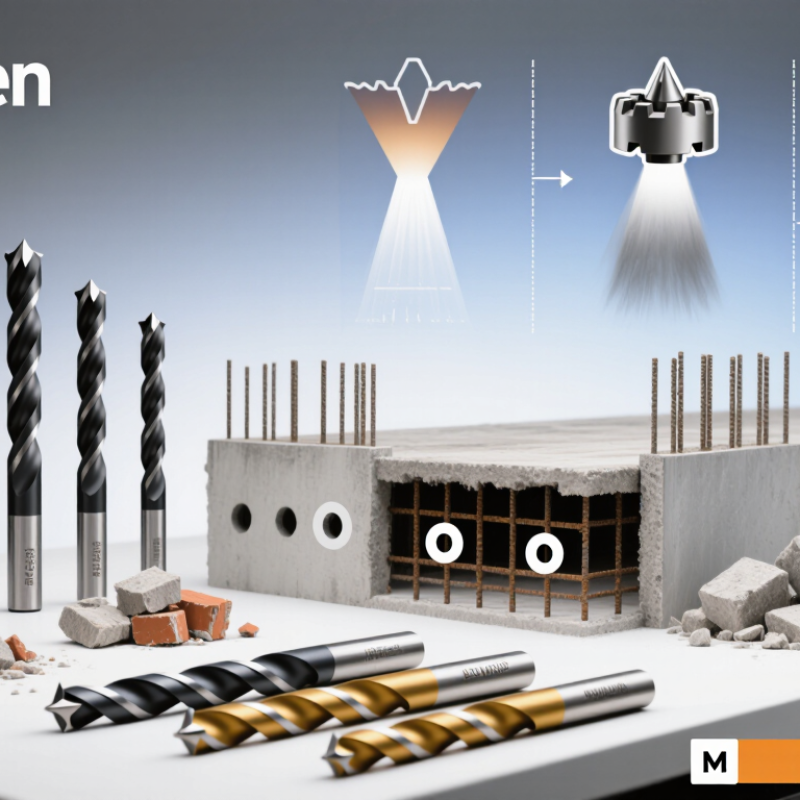
Concrete drilling demands the right masonry bit, not simply the hardest-looking tool. Carbide-tipped hammer bits suit anchor holes in brick, block, and standard concrete. Their cutting edges break brittle material while the flutes carry dust away.
SDS-plus bits work well for light rotary hammers and smaller holes. SDS-max bits handle deeper holes and heavier impact energy.
For clean, large openings, diamond core bits are more suitable. They cut around a solid concrete plug and reduce surface chipping.
Wet-cutting versions control heat and dust, but they need careful water management on active job sites.
The aggregate changes everything. Hard stone can wear carbide quickly, while reinforced concrete may damage a bit when it meets steel.
I once selected a bit by diameter alone and ignored concrete density. The hole was usable, but drilling took far too long. That mistake still matters.
Choose the bit according to hole size, depth, concrete strength, and drilling method.
For Chinese manufacturers serving concrete applications, consistent carbide quality, accurate brazing, and tested wear resistance are practical indicators of reliability. Product data should state suitable materials and operating limits clearly.
One detail deserves more testing: no masonry bit performs perfectly across every concrete mix.
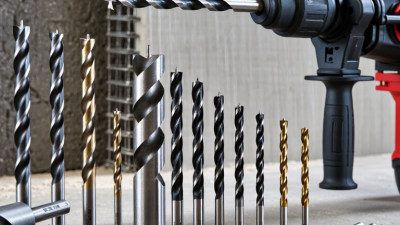
Masonry bits for concrete depend on two materials: a tough steel body and a wear-resistant carbide cutting tip. The body needs enough elasticity to absorb vibration without bending. Poor heat treatment can create hidden cracks. Those cracks may appear after only a few drilling cycles.
The carbide tip usually has a centered chisel, reinforced shoulders, and cutting edges shaped for impact work. A wider tip can clear hard aggregate, while a narrower profile may drill faster in softer block. The flute design also matters. Deep, polished flutes move concrete dust away from the hole and reduce heat around the shank. However, oversized flutes can weaken the core. This balance is often underestimated.
The shank must match the tool system and hold firm under repeated hammering. Accurate concentricity helps prevent wandering, especially when starting on smooth concrete. Quality manufacturers check tip alignment, braze or weld strength, hardness, and runout. Practical testing should include reinforced concrete, brick, and aged mortar. One test is never enough. Dust, vibration, and operator pressure change the result. A bit can look precise yet perform poorly in real walls. Careful inspection still matters.
Chinese manufacturers produce concrete drill bits through a controlled sequence of material selection, forming, brazing, and inspection. Cement demand explains the scale. The USGS Mineral Commodity Summaries 2024 estimated global cement production at 4.1 billion metric tons in 2023, with China producing about 2.1 billion tons. That volume creates constant demand for reliable masonry tools.
Factories usually begin with heat-treated alloy steel bodies and tungsten-carbide cutting tips. Engineers adjust tip geometry for concrete density, aggregate size, and drilling speed. CNC equipment forms the shank and helical flute, while brazing joins the carbide to the steel body. Workers then check concentricity, tip height, hardness, and surface cracks. A practical tolerance matters. Excessive runout can make a drill bit wander across a hard slab.
Production testing often includes repeated drilling into concrete blocks with embedded aggregate. Inspectors record penetration time, tip wear, vibration, and fracture patterns. The International Energy Agency reports that cement production creates roughly 7% of global energy-related and process CO2 emissions, highlighting the industry’s massive material footprint. Tool makers therefore try to extend bit life and reduce replacement waste.
The process is controlled, not flawless. Batch variation still appears. A slightly uneven braze or poorly matched carbide grade can shorten service life. Experienced manufacturers review failed samples, adjust furnace temperature, and refine flute dimensions before releasing another production batch. That practical feedback is often more valuable than a perfect laboratory result.
| Manufacturing Stage | Product Dimension | Typical Specification or Practice | Why It Matters for Concrete Drilling | Common Quality-Control Check |
|---|---|---|---|---|
| 1. Product Design | Bit Type | Rotary masonry bits, hammer-drill bits, and SDS-style concrete bits are designed for different drilling modes. | Rotary bits suit lighter masonry work, while hammer-drill designs are intended for faster penetration in concrete and reinforced masonry. | Review of working-mode compatibility, dimensional drawings, and application requirements. |
| 2. Material Selection | Bit Body Material | Alloy tool steel is commonly used for the shank and body because it provides a balance of toughness, strength, and machinability. | A tough steel body helps resist bending and fatigue during impact drilling. | Incoming material inspection, hardness testing, and verification of material certificates. |
| 3. Cutting Head Preparation | Carbide Grade | Cemented carbide inserts are commonly used at the tip because carbide maintains hardness and wear resistance at drilling temperatures. | The carbide head performs the crushing and cutting action against concrete aggregate and cement matrix. | Inspection of insert dimensions, brazing surface condition, and visible cracks or chips. |
| 4. Shank Forming | Shank Interface | Common configurations include round shanks, hex shanks, and slotted hammer-drill shanks used with compatible tool holders. | Accurate shank geometry improves torque transfer, tool retention, and concentric rotation. | Gauge inspection of shank dimensions, slot location, runout, and fit with reference holders. |
| 5. Flute Machining | Flute Geometry | Helical flutes are formed to remove concrete dust and drilling debris from the hole. | Efficient debris evacuation reduces clogging, friction, heat buildup, and drilling resistance. | Measurement of flute depth, helix consistency, surface finish, and overall straightness. |
| 6. Tip Assembly | Head Design | Tip configurations may use a single carbide cutting edge, two cutting edges, or multi-cutter geometry for larger diameters. | More advanced head designs can improve centering, balance, and drilling speed in hard concrete. | Visual alignment inspection, braze-joint inspection, and dimensional verification of the cutting head. |
| 7. Heat Treatment | Body Hardness | Controlled quenching and tempering are used to develop suitable hardness and toughness in the steel body. | Excessive hardness can increase brittleness, while insufficient hardness can accelerate wear and deformation. | Hardness testing at defined points and inspection for distortion or heat-treatment cracks. |
| 8. Brazing or Welding | Carbide-to-Body Joint | High-temperature brazing materials are used to join the carbide insert to the prepared steel head. | A continuous, well-formed joint helps the carbide remain secure under vibration and repeated impact. | Inspection for incomplete bonding, excessive voids, misalignment, and braze overflow. |
| 9. Grinding and Finishing | Cutting Edge Condition | Grinding establishes the final tip profile, edge symmetry, flute finish, and shank dimensions. | Balanced cutting edges reduce vibration and help produce a more accurately positioned hole. | Checks for cutting-edge symmetry, burrs, surface defects, and dimensional tolerance. |
| 10. Surface Protection | Surface Treatment | Depending on the specification, the steel body may receive cleaning, black oxide, phosphate, or another corrosion-control finish. | Surface protection helps limit rust during storage and transportation without replacing the need for proper maintenance. | Coating uniformity, surface cleanliness, corrosion appearance, and marking legibility. |
| 11. Dimensional Inspection | Diameter Range | Concrete masonry bits are commonly produced in small, medium, and large diameters, with exact sizes selected according to the anchor or fixing system. | Correct diameter is essential for anchor fit, hole clearance, and reliable load transfer. | Caliper, micrometer, plug-gauge, and optical measurement of diameter and length. |
| 12. Performance Testing | Test Materials | Representative tests may use concrete blocks, cured concrete specimens, brick, or masonry substrates with documented conditions. | Testing on relevant materials helps verify drilling speed, hole quality, wear behavior, and tip retention. | Recording drilling time, hole diameter, vibration, visible damage, and remaining cutting-edge condition. |
| 13. Balance and Runout Check | Rotational Accuracy | Finished bits are checked for straightness and radial runout before packing. | Low runout improves hole accuracy, reduces vibration, and helps protect the drill chuck and tool holder. | Dial-indicator measurement and visual inspection on a reference rotating fixture. |
| 14. Packaging and Traceability | Packing Information | Packaging normally identifies diameter, working length, total length, shank type, quantity, and production batch. | Clear identification reduces installation errors and supports batch-level quality tracking. | Final quantity count, label verification, packaging integrity, and batch-record review. |
Selecting a masonry bit supplier for concrete requires more than comparing catalog prices. Performance begins with measurable standards and repeatable production control. Check diameter tolerance, shank accuracy, tip alignment, and cutting-edge hardness. Excessive runout can make a drill vibrate within seconds. Carbide tip bonding also deserves close attention. A secure joint should survive impact, heat, and repeated loading without loosening.
In practical site trials, test bits against the concrete grades your customers commonly use. Record drilling speed, hole accuracy, dust removal, and service life. A useful supplier can provide batch records, inspection data, and clear test methods. Ask whether workers inspect brazed joints and shank dimensions during production. ISO-based quality systems are helpful, but documents cannot replace physical samples. Request samples from different production batches.
No factory is flawless. I have seen strong samples followed by inconsistent shipments. That experience makes traceability essential. Reliable manufacturers should identify raw materials, production dates, operators, and inspection results. They should also explain corrective actions when a batch fails. Vague answers are warning signs. Communication matters too. A supplier that responds quickly before an order may become slow after payment. Review packaging, moisture protection, labeling, and replacement procedures. Small details often reveal how seriously a manufacturer treats long-term performance.
Concrete masonry bits are used for anchor holes, conduit routes, pipe passages, and dowel installation. Their carbide cutting tips handle brick, block, and cured concrete.
The Global Cement and Concrete Association reports that the industry produces about 14 billion cubic metres of concrete annually.
This scale demands reliable drilling tools and disciplined maintenance. Hole size, aggregate hardness, and drilling depth should guide bit selection.
Use rotary hammer mode only when the bit allows it. Apply steady pressure, not excessive force. Excess pressure can fracture the tip or widen the hole.
Withdraw the bit regularly to clear dust and reduce heat. Dry drilling suits shallow work, while water cooling supports deeper holes when site conditions permit.
Never force a dull bit.
Clean the shank after every shift. Inspect carbide edges for cracks, rounding, or missing pieces. Store bits in a dry sleeve, away from loose steel tools.
The U.S. Occupational Safety and Health Administration limits respirable crystalline silica exposure to 50 micrograms per cubic metre over eight hours.
Dust extraction and wet methods therefore protect workers and improve cutting performance.
A recurring site lesson is uncomfortable: many “bad” bits were used too long. No checklist is perfect, but recording hole count and drilling time helps prevent avoidable failures.