How to Choose the Right Miter Saw Blade for Your Projects?
Choosing the right Miter Saw Blade is crucial for successful woodworking projects. Many professionals emphasize that blade selection impacts cut quality and efficiency. According to a report by the Woodworking Machinery Industry Association, using the correct blade can reduce project time by up to 15%.
Different materials require specific Miter Saw Blades. For instance, hardwood and softwood necessitate distinct tooth configurations to optimize performance. In a study published by the American National Standards Institute, 82% of users reported improved precision with tailored blades. However, not all users understand the importance of these differences.
Some may choose blades based on cost alone. This can lead to subpar results. A mismatched blade can cause tear-out or chipping, ultimately wasting time and materials. Thus, a deeper understanding of Miter Saw Blade specifications is essential. Investing in quality cutting tools yields long-term benefits that novice users may initially overlook.
Types of Miter Saw Blades and Their Specific Uses
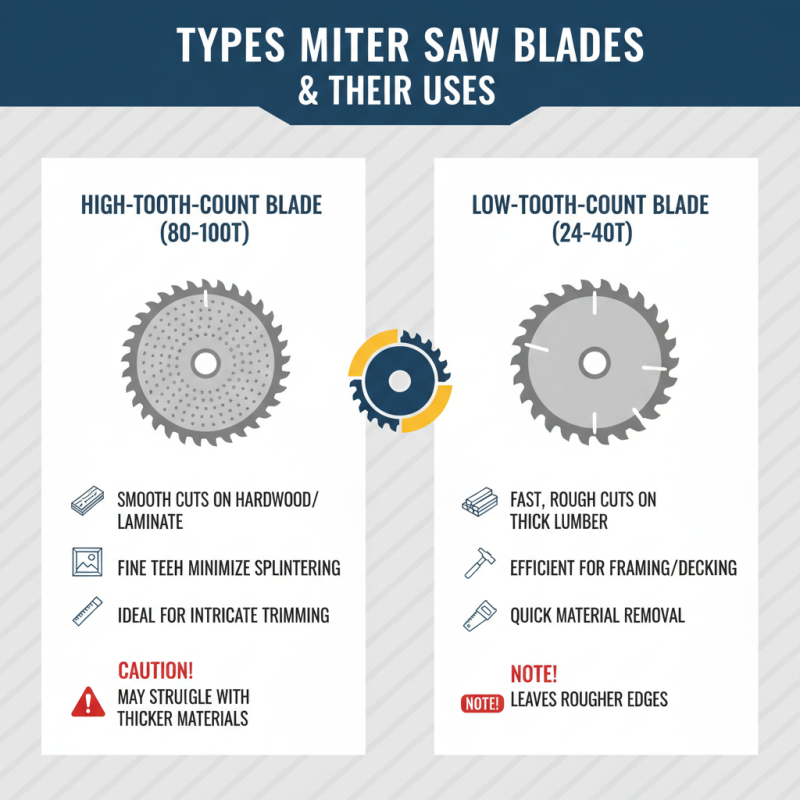
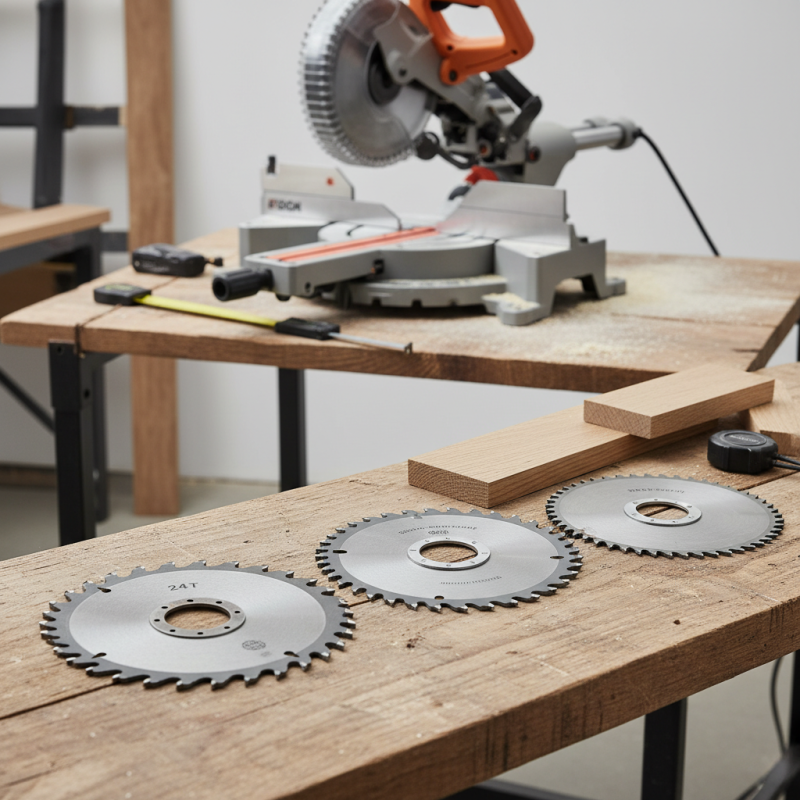
When selecting a miter saw blade, understanding the types and their specific uses is crucial. Different tasks require different blades. A high tooth count blade, for example, excels at producing smooth cuts on hardwood or laminate. It features fine teeth that minimize splintering, ideal for intricate trim work. However, it may struggle with thicker materials, creating unnecessary friction.
On the other hand, a lower tooth count blade is better suited for cutting through softwoods. These blades are designed for efficient material removal, making quick work of framing and rough cuts. Yet, they may leave a rough edge that needs sanding, signaling the importance of choosing the right blade for the job.
For angled cuts, consider a specialized blade like a combination blade or a dedicated miter blade. These options enhance accuracy while allowing for versatility in projects. Be prepared for trial and error as you learn which blade fits your unique needs best. Proper knowledge can lead to improved outcomes, but even seasoned woodworkers occasionally choose the wrong blade, teaching us that experience often comes with lessons learned.
Factors to Consider When Selecting a Miter Saw Blade
When choosing a miter saw blade, multiple factors come into play. Blade material is vital. High-speed steel (HSS) blades are standard for general use. Carbide-tipped blades are preferred for tough materials. According to a 2021 industry report, carbide-tipped blades can last up to 10 times longer than HSS blades. This longevity can lead to cost savings over time, especially for frequent users.
Tooth count also affects performance. Blades with fewer teeth cut faster and leave rougher edges. In contrast, blades with more teeth provide cleaner, smoother cuts but may take longer. An optimal range is between 60 to 80 teeth for intricate moldings and trim work. Preferences vary, and even experienced woodworkers might choose differently based on project needs.
Consider the kerf thickness too. A thin kerf blade removes less material, which is great for precision. Yet, it may not be as durable. A thicker blade is sturdier but could lead to more waste. Some users might realize they need to adjust their technique based on the blade they choose. Being adaptable is key in every project. Keeping these points in mind can drastically enhance your cutting efficiency.
How to Choose the Right Miter Saw Blade for Your Projects? - Factors to Consider When Selecting a Miter Saw Blade
| Blade Type |
Number of Teeth |
Material |
Ideal Use |
Finishing Quality |
| Crosscut Blade |
50-80 |
High Carbon Steel |
Crosscuts in Wood |
Smooth Cuts |
| Rip Blade |
24-30 |
Carbide Tipped |
Rips through Lumber |
Less Smooth |
| Finish Blade |
80-100 |
Carbide |
Fine Woodworking |
Excellent Finish |
| Dado Blade |
Various |
Carbide Tipped |
Grooves and Dados |
Variable |
| All-Purpose Blade |
40-60 |
Carbide Tipped |
Versatile Use |
Acceptable Finish |
Understanding Blade Materials and Their Impact on Performance
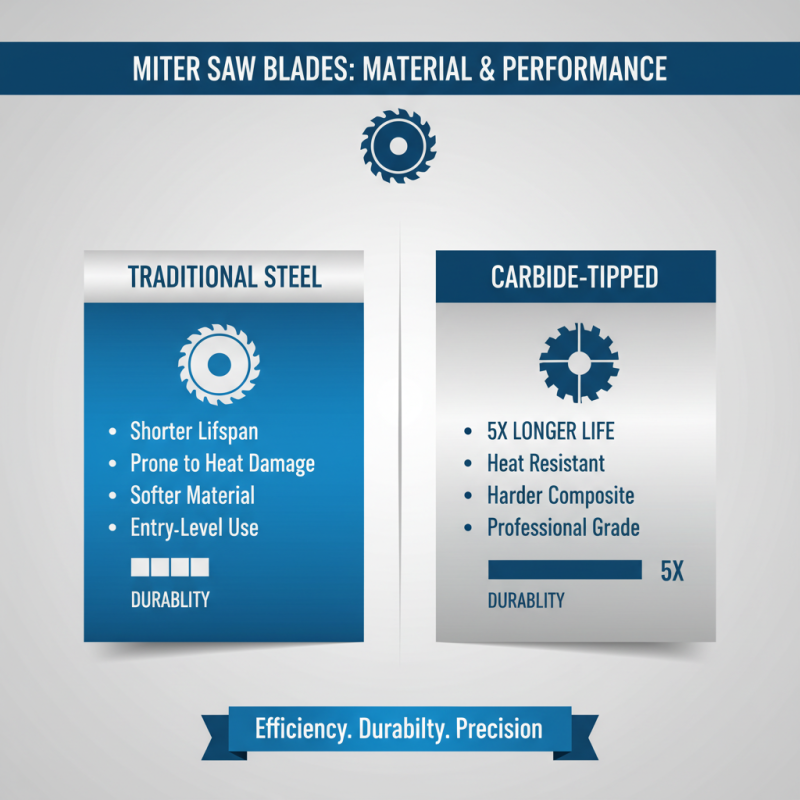
Choosing the right miter saw blade is crucial for project success. The blade material significantly impacts performance, especially for cutting different materials. Carbide-tipped blades are popular among professionals for their durability and heat resistance. Data shows that carbide-tipped blades last up to five times longer than traditional steel blades. This longevity translates to fewer changes and more efficiency on the job site.
One must consider the type of cuts being made. For example, a fine finish cut demands a different blade than rough cuts. High-Speed Steel (HSS) blades can perform well but may dull quickly under heavy use. Industry reports indicate that for everyday woodworking, using a carbide blade can enhance precision. However, not all projects require high-end blades. Evaluating the project scale and frequency of use is essential.
Understanding the impact of bore diameter and tooth count is vital. A blade with fewer teeth cuts faster but sacrifices finish quality. In contrast, a blade with more teeth offers smoother cuts but may slow down the process. Each project potentially has its unique challenges. Selecting the right blade is often trial and error. Experience plays a pivotal role in learning which blade works best for each task. Balancing performance with cost is a constant reflection for many woodworkers.
Choosing the Right Tooth Count for Your Cutting Needs
Choosing the right tooth count for your miter saw blade can drastically impact your project's outcome. A higher tooth count provides smoother cuts. However, it often slows down the cutting speed. This can be a disadvantage when working with softer woods or quick projects. It's essential to balance efficiency and finish.
For rough cuts, consider blades with fewer teeth. A 24-tooth blade works well for cutting framing lumber. It removes more material quickly, saving time. But the finish may require extra sanding. For precise cuts like crown molding, a 60-tooth or more blade is ideal. It yields a cleaner edge but could take longer. Depending on your project, you might feel stuck deciding which direction to go.
Remember that each material behaves differently. A blade designed for hardwood might struggle with softwood. Users often find that experimenting with tooth counts leads to better understanding. It’s a journey of finding the right fit for your specific needs. Each project teaches valuable lessons on efficiency and detail.
Maintenance Tips for Prolonging the Life of Your Miter Saw Blade
Maintaining your miter saw blade is crucial for optimal performance and longevity. Regular maintenance can significantly extend its life, ensuring precise cuts.
Research shows that a well-maintained blade can last up to three times longer than one neglected. This is particularly important for professionals who rely on their tools daily.
Cleaning the blade after each use is a simple yet effective practice. Use a soft brush to remove sawdust and debris. For tougher grime, consider a blade cleaning solution.
Reports indicate that 70% of users who clean their blades regularly notice improved cutting efficiency. It's essential to inspect for damage as well. Even minor nicks can lead to uneven cuts and can compromise safety.
Proper storage also plays a vital role in blade health. Store blades in a protective case or on a magnetic strip, avoiding rust and corrosion.
Experts suggest keeping blades in a temperature-controlled environment. Temperature fluctuations can warp blades and affect their performance.
While these steps may seem tedious, they are critical for anyone serious about woodworking projects. Neglecting maintenance can lead to frustration and compromised results.